
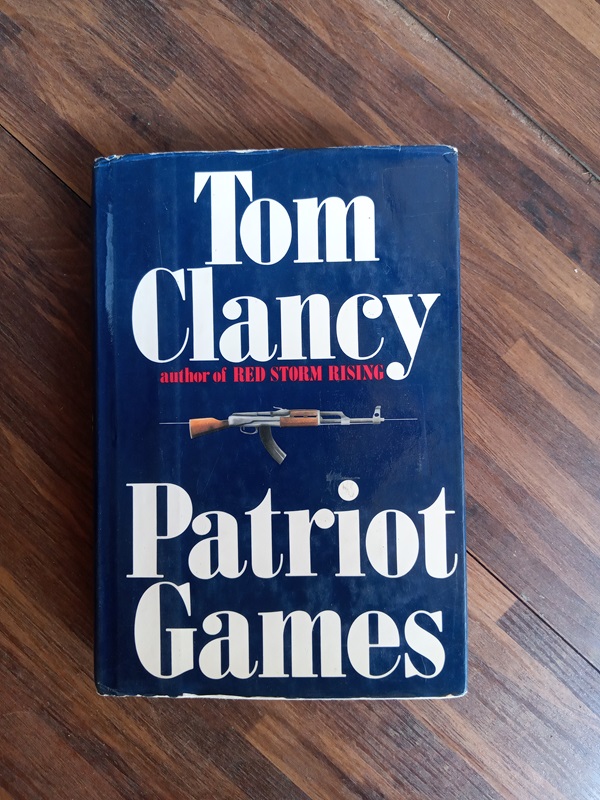
Published in August 1987, Patriot Games is Tom Clancy’s second Jack Ryan novel but occupies an early chronological position in the series timeline, bridging Ryan’s civilian academic life with his eventual career as a senior intelligence operative. The novel’s core premise revolves around an ordinary man thrust into extraordinary danger after a spontaneous act of heroism. While vacationing in London with his pregnant wife, Cathy, and their young daughter, Sally, history professor and former U.S. Marine Jack Ryan intervenes to stop an assassination attempt on the Prince and Princess of Wales. This single moment of courage triggers a chain reaction of terrorism, intelligence warfare, and personal vengeance. The summary that follows examines the novel’s narrative architecture, character development, thematic depth, geopolitical context, literary style, and enduring cultural footprint.
Patriot Games Detailed Plot Breakdown
Act I: The London Incident & Immediate Aftermath
The novel opens with the Ryan family on a working holiday in London. While walking near Buckingham Palace, Ryan witnesses a heavily armed cell from the fictional Ulster Liberation Army (ULA) ambushing the royal couple. Without hesitation, Ryan tackles the lead attacker, Sean Miller, disrupting the assassination plot. Miller’s accomplices are neutralized by British security, and Ryan is hailed as a national hero. The incident draws intense media scrutiny, placing the Ryans under temporary protective custody. Ryan’s academic background and military discipline catch the attention of British intelligence and, subsequently, the CIA.
Act II: Recruitment, Investigation & Escalation
Admiral James Greer, then head of CIA intelligence, recruits Ryan as a part-time consultant. Ryan’s expertise in geopolitical history and analytical thinking prove invaluable as U.S. and British agencies dismantle the ULA network. Sean Miller is captured, tried, and sentenced, but political maneuvering and legal technicalities lead to his early release. Miller flees to Libya, where he secures funding, weapons, and training from Muammar Gaddafi’s regime. The ULA fractures into a more radical, externally backed cell that shifts its focus from political insurgency to international terrorism. Ryan balances his teaching duties at the U.S. Naval Academy with clandestine intelligence work, growing increasingly aware of the blurred lines between academic analysis and operational reality.
Act III: The Threat Comes Home
Fueled by vengeance and ideological extremism, Miller and his Libyan-backed handlers decide to eliminate Ryan to send a message to Western intelligence. They launch a coordinated assault on the Ryan residence in Maryland while Jack is at Langley. Cathy and Sally are trapped inside, but with the help of a neighboring security contractor and their own quick thinking, they survive a brutal firefight. Ryan rushes home, participates in repelling the attackers, and witnesses the visceral cost of his involvement firsthand. The attack shatters Ryan’s sense of civilian immunity and catalyzes his decision to transition from part-time consultant to full-time CIA operative. Intelligence tracking soon identifies the attackers’ training base in Libya.
Act IV: Climax & Resolution
Armed with actionable intelligence, the CIA and British SAS plan a joint covert strike on the ULA/Libyan training camp. Despite protocol restrictions, Ryan insists on participating, driven by a personal imperative to ensure Miller does not escape justice again. The operation unfolds with Clancy’s signature tactical precision: infiltration, surveillance, breaching, and close-quarters combat. During the raid, Ryan and Miller face off in a brutal, psychologically charged confrontation. Ryan ultimately kills Miller, ending the immediate threat but grappling with the moral weight of taking a life. The camp is dismantled, intelligence networks are rolled up, and the ULA’s transnational operations are severely crippled.
Epilogue & Series Continuity
In the aftermath, Ryan formally accepts a permanent position within the CIA’s analytical and operational directorates. The novel closes with Ryan reflecting on the sacrifices required to protect his family and his country, setting the stage for his evolution into the senior intelligence figure featured in later novels like The Cardinal of the Kremlin and Clear and Present Danger.
Patriot Games Character Analysis
Jack Ryan
Ryan begins as a civilian historian and family man, grounded in ethics, intellect, and a deep sense of civic duty. His transition into intelligence work is neither glamorized nor effortless; it is driven by trauma, responsibility, and analytical necessity. Ryan’s strength lies in his ability to synthesize historical patterns with real-time data, anticipate adversarial behavior, and maintain moral clarity amid ethical gray zones. He embodies Clancy’s ideal of the “citizen-intellectual” thrust into national security.
Cathy & Sally Ryan
Cathy (a medical professional) and Sally serve as the emotional and narrative anchor of the novel. Their vulnerability during the Maryland attack crystallizes the stakes of Ryan’s work. Rather than passive victims, they demonstrate resilience and agency, particularly Cathy’s quick thinking under fire. Their presence constantly grounds Ryan’s professional decisions in human consequence, reinforcing the novel’s exploration of duty versus domestic life.
Sean Miller
Miller is a meticulously crafted antagonist: ideologically committed, tactically proficient, and psychologically complex. Unlike cartoonish villains, Miller’s extremism is rooted in genuine grievance, political disillusionment, and a personal sense of betrayal. His obsession with Ryan evolves from strategic retaliation into a deeply personal vendetta, making him a dark mirror to Ryan’s own sense of duty and sacrifice.
Supporting Cast
- Admiral James Greer: Ryan’s mentor and the moral/professional compass of the CIA apparatus. Greer represents institutional integrity and strategic patience.
- British Intelligence & SAS Liaisons: Portrayed as highly professional, emphasizing the necessity of transatlantic cooperation in counterterrorism.
- ULA Operatives & Libyan Handlers: Illustrate the decentralized, state-sponsored nature of 1980s terrorism, highlighting how non-state actors leverage geopolitical patronage.
Character Dynamics
The novel thrives on relationships built on trust, ideological friction, and operational necessity. Ryan’s interactions with Greer reflect mentorship and institutional loyalty; his clashes with Miller underscore the psychological warfare inherent in counterterrorism; his bond with Cathy and Sally humanizes the intelligence community’s often sterile procedural world.
Patriot Games Central Themes & Motifs
Terrorism vs. Counterterrorism
Clancy dissects the mechanics of asymmetric warfare: recruitment, financing, safe havens, and psychological impact. The novel contrasts the ULA’s decentralized, ideologically driven violence with the methodical, intelligence-led response of Western agencies, emphasizing that defeating terrorism requires both tactical precision and strategic patience.
Duty vs. Family
Ryan’s central internal conflict revolves around protecting his loved ones while serving a larger national mission. The Maryland attack forces him to confront the impossibility of complete separation between professional obligation and personal life, a tension that defines his character arc.
Intelligence Realism
The novel demystifies espionage by foregrounding analysis, surveillance, inter-agency coordination, and legal constraints. Clancy portrays intelligence work as a discipline of patterns, probabilities, and paperwork as much as field operations.
Moral Ambiguity
Clancy refuses easy binaries. Ryan’s use of lethal force, the ethical compromises of working with foreign regimes, and the legal gray zones of counterterrorism operations all challenge simplistic notions of justice versus vengeance.
The Irish Conflict
Though fictionalized, the ULA’s splinter-faction dynamics mirror real-world Troubles-era fragmentation. Clancy explores how ideological purity often gives way to criminality and external manipulation, offering a nuanced critique of radicalization.
Patriot Games Setting & Geopolitical Context
The novel is firmly rooted in the late Cold War/early post-Cold War transition. The 1980s backdrop features shifting superpower dynamics, the rise of state-sponsored terrorism, and growing transnational security cooperation. The fictionalized Northern Ireland conflict reflects real sectarian violence, while Libya’s involvement mirrors Gaddafi’s actual support for militant groups during the era. Clancy emphasizes how geographic, political, and ideological borders are increasingly porous in modern conflict. The transatlantic intelligence partnership between the U.S. and U.K. is portrayed as essential, pragmatic, and occasionally strained by bureaucratic differences. This geopolitical realism amplifies tension, grounding the thriller in recognizable historical currents.
Patriot Games Narrative Style & Literary Techniques
Clancy employs a multi-perspective structure, shifting between Ryan, intelligence operatives, terrorists, and government officials. This creates a mosaic narrative that emphasizes systemic complexity over individual heroism. Technical realism is a hallmark: weapons specifications, surveillance tradecraft, cryptographic procedures, and military protocols are rendered with meticulous accuracy. Pacing is deliberately architectural: slow-burn intelligence gathering builds into methodical operational planning, culminating in a tightly choreographed climax. Dialogue is functional and exposition-heavy but balanced by psychological tension and procedural stakes. The novel exemplifies the “techno-thriller” genre, merging character-driven drama with institutional realism, making intelligence work accessible without sacrificing authenticity.
Patriot Games Critical Reception & Cultural Impact
Upon release, Patriot Games was a commercial and critical success, praised for its procedural authenticity, geopolitical insight, and gripping narrative structure. Critics lauded Clancy’s ability to make intelligence analysis compelling and his refusal to sensationalize violence. The 1992 film adaptation, starring Harrison Ford, streamlined the plot, altered chronology, and amplified action sequences for cinematic pacing, but retained the core themes of vengeance, family, and intelligence ethics. The novel helped cement Clancy’s reputation as the defining voice of modern American thriller fiction and expanded the Jack Ryan universe into films, television series, video games, and spin-off literature. Its placement in Clancy’s bibliography marks a pivotal moment in the evolution of the espionage thriller from Cold War paranoia to post-Cold War counterterrorism realism.
You May Also Like to Check:
Conclusion & Key Takeaways
Patriot Games is a masterclass in geopolitical thriller construction, blending intellectual rigor with visceral stakes. Through Jack Ryan’s forced evolution from academic to operative, Tom Clancy explores the human cost of counterterrorism, the fragility of civilian immunity, and the moral complexities of national security. The novel’s enduring relevance lies in its prescient depiction of transnational terrorism, state-sponsored extremism, and the intelligence community’s struggle to balance legality, efficacy, and ethics. For readers, scholars, and genre enthusiasts alike, Patriot Games remains a foundational text that redefined what a modern thriller could achieve: not just suspense, but systemic understanding. Its legacy endures in both literary tradition and popular culture, offering a timeless examination of duty, sacrifice, and the thin line between patriotism and peril.
