
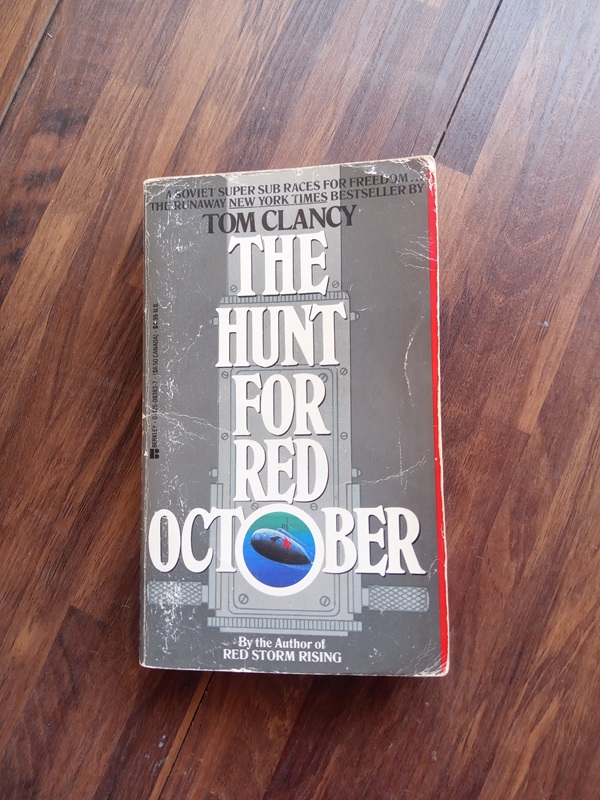
The Hunt for Red October (1984) is the debut novel of Tom Clancy and the book that launched the legendary Jack Ryan universe. Set at the height of the Cold War in the early 1980s, the novel is a seminal work of the techno-thriller genre. It combines meticulous military detail with high-stakes geopolitical suspense.
The core premise revolves around a singular, unprecedented event: the captain of the Soviet Union’s most advanced nuclear submarine attempts to defect to the United States. The story explores the tension between superpowers, the intricacies of naval warfare, and the human conscience amidst ideological conflict.
Character Profiles
🇷🇺 The Defectors (Soviet Side)
- Captain Marko Ramius: The protagonist of the Soviet narrative. A Lithuanian-born Soviet Navy Captain of the Third Rank. He is a legendary submarine commander known as “Red October” to his crew. Motivated by the death of his wife (who died due to the negligence of a drunk surgeon protected by the Party), he has lost faith in the Soviet system.
- Ivan Putin: The ship’s Political Officer. Ramius murders him early in the voyage to ensure the defection plan remains secret, staging it as a heart attack.
- Vasily Borodin: The Executive Officer (XO). Ramius’s trusted right-hand man who is fully loyal to the defection plan.
- Victor Tupolev: Commander of the Soviet Alfa-class submarine. A former student of Ramius, he is ordered to hunt down and destroy the Red October. He represents the loyal Soviet military machine.
🇺🇸 The Americans (US Side)
- Jack Ryan: A CIA analyst and former Marine Lieutenant. Unlike typical action heroes, Ryan is an intellectual who solves problems through research and deduction. He is the first to hypothesize that Ramius intends to defect rather than attack.
- Admiral James Greer: The Deputy Director of the CIA for Intelligence and Ryan’s mentor. He facilitates Ryan’s access to high-level decision-makers.
- Captain Bart Mancuso: Commander of the USS Dallas, a US attack submarine tasked with tracking the Red October.
- Jones: The Chief Sonarman on the Dallas. A brilliant technician whose ability to interpret sonar data is crucial in locating the silent submarine.
🇷🇺 The Soviet Pursuers
- Admiral Korov: Commander of the Soviet Northern Fleet. He is under immense political pressure to stop Ramius without causing an international incident or losing face.
Setting & Technical Elements
Primary Locations
- Polyarny, USSR: The secret naval base where the Red October is docked and from which it departs.
- The North Atlantic: The vast hunting ground where the submarine chase takes place.
- The US East Coast: The intended destination for the defection.
The Submarines
- Red October (Typhoon-class): A massive ballistic missile submarine. Its defining feature is the “Caterpillar Drive” (magnetohydrodynamic propulsion), which moves water without moving parts, making the sub nearly silent and undetectable by traditional sonar.
- USS Dallas (Los Angeles-class): A fast attack submarine equipped with advanced sonar arrays.
- Soviet Alfa-class: A smaller, titanium-hulled submarine designed for high speed and deep diving, used as a hunter-killer.
Key Technology & Jargon
- SONAR: The primary method of detection. The plot hinges on Passive Sonar (listening) vs. Active Sonar (pinging, which reveals your own position).
- Ballistic Missiles: The Red October carries nuclear missiles, raising the stakes of its movement.
- Naval Protocols: The book details the rigid chain of command, rules of engagement, and communication procedures of both navies.
Plot Breakdown
Act I: The Departure & Discovery
The novel opens with Captain Marko Ramius executing his plan. Before leaving port, he kills Political Officer Ivan Putin to prevent him from reporting the true mission. Under the guise of routine exercises, the Red October departs Polyarny.
Ramius has written a secret letter to the US Navy, delivered via a trusted contact, stating his intent to defect with the vessel. However, US intelligence intercepts communications suggesting the submarine is heading toward the American coast to launch a first strike. Panic ensues in Washington.
Jack Ryan, analyzing the movement patterns and Ramius’s psychological profile, proposes a radical theory: Ramius is not attacking; he is defecting. Ryan argues that Ramius’s career history and the submarine’s erratic path suggest a desire to surrender the technology to the West.
Act II: The Cat-and-Mouse Game
The US Navy deploys assets to track the Red October, but the submarine’s new Caterpillar Drive makes it invisible to standard sonar. The Soviets, realizing Ramius has gone rogue, order Admiral Tupolev to sink the Red October to prevent the technology from falling into American hands.
A tense game of hide-and-seek unfolds in the Atlantic. The USS Dallas, led by Captain Mancuso and Sonarman Jones, manages to catch faint acoustic signatures of the Red October. Jones identifies the unique sound of the Caterpillar Drive, confirming the sub’s presence.
Meanwhile, Ramius must maintain the illusion of loyalty to his crew while secretly preparing them for the defection. He maneuvers the ship dangerously to shake off Soviet pursuers while avoiding provoking the US Navy into attacking him.
Act III: The Climax
Jack Ryan convinces CIA Director Greer and the President to allow him to board the Red October to verify the defection personally. In a daring sequence, Ryan is flown via helicopter to the surfacing submarine in rough seas and transferred aboard.
Ryan meets Ramius and confirms the captain’s intentions. They formulate a plan: The US must protect the Red October from the Soviet Alfa without officially acknowledging the defection. If the Soviets know the US has the sub, they will demand its return or escalate to war.
Tupolev’s Alfa closes in for the kill. Ramius plans to steer the Red October into a deep underwater canyon, simulating a crash. This will allow the crew to be evacuated by the US while the submarine is “lost,” preventing the Soviets from claiming it.
Act IV: Resolution
The USS Dallas engages the Soviet Alfa to protect the Red October. In a tense underwater battle, the Dallas fires a torpedo that destroys the Alfa, eliminating the immediate threat.
The Red October enters the canyon. Ramius and his loyal officers abandon ship, transferring to US vessels. The US Navy officially declares that the Red October was destroyed in a navigational accident. The Soviet Union accepts this explanation to save face, avoiding a diplomatic crisis.
Ramius and his crew are granted asylum in the United States under new identities. Jack Ryan returns to his life as an analyst, having prevented a potential war and secured a major intelligence victory.
Key Themes & Analysis
Loyalty vs. Conscience
The central moral conflict is Ramius’s betrayal of his country to follow his conscience. Clancy portrays this not as treason, but as a higher moral duty against a corrupt system. The book asks: When does duty to humanity override duty to the state?
Technology & Professionalism
Clancy elevates technology to a character itself. The Caterpillar Drive represents the shifting balance of power. Furthermore, the book respects the professionalism of military men on both sides. Soviet officers are not caricatures; they are skilled professionals bound by a rigid system, contrasting with the more individualistic American command structure.
The Intellectual Hero
Jack Ryan redefined the action hero. He does not win through gunfights but through knowledge. His weapon is information analysis. This theme suggests that in the modern age, understanding complex systems is more powerful than brute force.
East vs. West Nuance
While clearly pro-American, the novel avoids demonizing the average Soviet citizen or sailor. The antagonism is directed at the Soviet political system, not the people. This nuance added depth to Cold War fiction.
Critical Reception & Legacy
Impact on the Genre
The Hunt for Red October is credited with defining the techno-thriller. It set a new standard for accuracy in military fiction, requiring future authors to research technical details rigorously.
Real-World Reception
- President Ronald Reagan famously called it “the perfect yarn” and “unputdownable,” which skyrocketed sales.
- Military Reception: The US Navy reportedly used the book for training purposes due to its accurate depiction of submarine warfare protocols.
- Sales: It became a bestseller, staying on the New York Times list for months and launching Clancy’s career as a multimedia franchise.
Adaptations
The 1990 film adaptation starred Sean Connery (Ramius) and Alec Baldwin (Ryan). While successful, the film simplified many technical plot points and changed the ending slightly (e.g., the fate of the submarine). The book remains more detailed and complex.
Conclusion
The Hunt for Red October is more than a suspense novel; it is a detailed simulation of Cold War naval strategy wrapped in a human story. Its enduring popularity lies in the balance between high-tech intrigue and the personal journey of Marko Ramius.
Final Verdict for Books Point Customers
- Read this if: You enjoy military history, political intrigue, or intelligent thrillers where the hero uses his brain instead of just a gun.
- Skip this if: You prefer fast-paced action without technical explanations (Clancy spends time explaining sonar and propulsion).
- Pair with: Clear and Present Danger (next Jack Ryan book) or non-fiction Cold War histories like The Cold War: A World History.
This novel remains a masterpiece of the genre and an essential read for understanding the evolution of modern thriller fiction.
You May Also Like:
- Complete List of Tom Clancy Books
Ready to buy Tom Clancy Books? Head to our fiction bookshelf section and see more of his books. Read this book? Kindly share your thoughts in the comments form below…
