
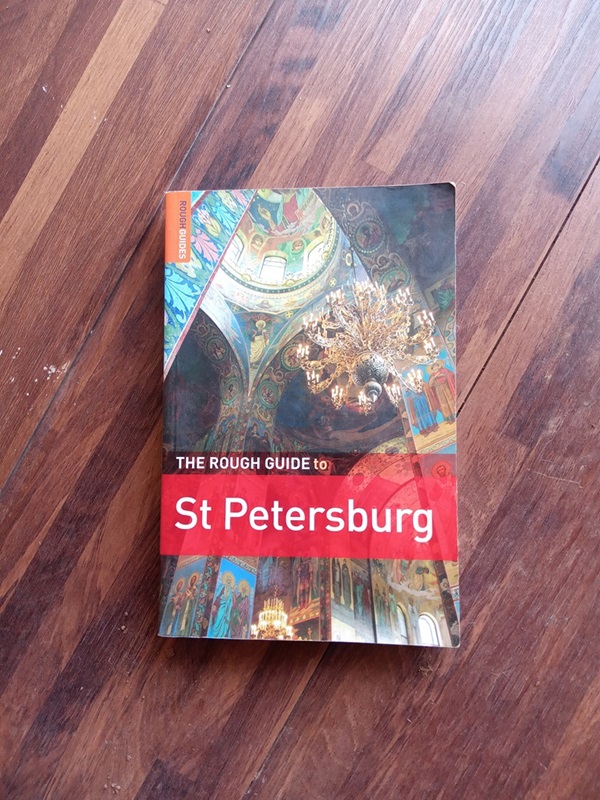
Published in 2008 as part of Rough Guides acclaimed independent travel series, the 6th edition of The Rough Guide to St Petersburg is designed as both a practical companion and a cultural companion to Russia’s former imperial capital.
True to the Rough Guides ethos, the book avoids promotional fluff in favor of candid assessments, historically grounded context, and traveler-tested recommendations. While the edition predates the smartphone era and modern digital booking infrastructure, its editorial philosophy remains focused on enabling independent, culturally aware travel.
The guide balances logistical planning with deep narrative context, positioning St. Petersburg not merely as a collection of sights, but as a living archive of Russian history, art, and urban identity.
The Rough Guide to St Petersburg (6th Edition 2008) Historical & Cultural Foundations
The guide opens with a thorough historical survey that traces St. Petersburg from its 1703 founding by Peter the Great through its evolution into a European-facing imperial showcase. It examines the architectural and urban planning visions of the Tsarist era, highlighting the Baroque and Neoclassical styles that define the city’s palaces, cathedrals, and broad avenues.
The narrative then moves into the 20th century, covering the 1917 Revolution, the renaming to Leningrad, the harrowing 900-day siege during World War II, and the city’s cultural resilience under Soviet rule.
The post-1991 transition is addressed with attention to economic shifts, heritage restoration, and the city’s reemergence as a cultural capital. Interspersed throughout are contextual essays on Russian literature, classical music, ballet, and visual arts, framing St. Petersburg as a crucible of creative expression rather than merely a tourist destination.
The Rough Guide to St Petersburg (6th Edition 2008) City Organization & Neighborhood Guides
Rather than presenting the city as a monolithic list of attractions, the guide structures its coverage geographically and experientially. St. Petersburg is divided into logical districts: the historic center around Nevsky Prospekt and the Admiralty, Vasilevsky Island (home to academic institutions and museums), the Petrograd Side (with its Art Nouveau architecture and quieter residential feel), and the Vyborg Side.
Each neighborhood section opens with a concise historical and architectural overview, followed by curated walking routes that follow canals, embankments, and pedestrian-friendly streets. The guide emphasizes how to navigate the city like a local, pointing out courtyard passages, hidden cafes, neighborhood markets, and lesser-known architectural gems that reward slower, more immersive exploration.
Must-See Attractions & Cultural Sites
The guide dedicates substantial coverage to St. Petersburg’s iconic institutions, but consistently pairs sightseeing with context and strategy. The State Hermitage Museum is examined not just for its scale, but for its imperial origins, collection highlights (Rembrandt, Impressionists, antiquities), and practical advice on avoiding crowds and planning routes.
Palace Square, the Church of the Savior on Spilled Blood, St. Isaac’s Cathedral, and the Kazan Cathedral are analyzed for their architectural significance, historical symbolism, and visitor logistics.
Imperial outskirts receive dedicated sections: Peterhof’s fountains and gardens, Pushkin’s (Tsarskoye Selo) Catherine Palace and Amber Room, Pavlovsk’s English-style landscapes, and Gatchina’s parkland.
Cultural venues like the Mariinsky Theatre and the Russian Museum are covered with performance calendars, ticketing advice, and historical background on Russia’s ballet and fine arts traditions. Throughout, the guide distinguishes between tourist-heavy sites and culturally resonant alternatives, offering tiered recommendations based on time, budget, and interest.
The Rough Guide to St Petersburg (6th Edition 2008) Practical Travel Information
This section delivers the logistical backbone of the guide, reflecting travel realities as of 2008. It covers visa requirements, migration registration rules, and border procedures, alongside detailed accommodation reviews ranging from budget hostels to historic luxury hotels.
Dining and nightlife are mapped by neighborhood and price point, with emphasis on traditional Russian cuisine, Soviet-era cafés, contemporary restaurants, and seasonal venues.
Transportation guidance includes metro navigation (with line-by-line breakdowns), bus/tram routing, river transport, airport transfers, and pre-ride-hailing taxi advice.
Additional chapters address money exchange, safety, health, communication, cultural etiquette, and emergency contacts. While prices, phone numbers, and digital services are necessarily outdated, the structural advice, neighborhood logistics, and cultural etiquette notes remain highly applicable for trip preparation.
Day Trips & Regional Excursions
Recognizing that St. Petersburg’s historical influence extends well beyond its municipal borders, the guide dedicates a substantial section to regional travel. Kronstadt is presented as a naval and architectural outpost, with guidance on visiting its fortifications and maritime museum.
Vyborg is framed as a cross-cultural destination blending medieval Scandinavian heritage with Russian imperial layers. Lake Ladoga and the Valaam Monastery are covered for their spiritual significance, natural beauty, and seasonal ferry access.
Further afield, Novgorod is highlighted as the cradle of early Russian statehood, while Pskov and Staraya Ladoga offer medieval architecture and archaeological depth. The Kizhi Island wooden architecture complex receives special attention, with advice on multi-day itineraries and transport via Lake Onega.
Each excursion includes historical context, transport options, seasonal considerations, and realistic time estimates.
Special Features & Reference Materials
The guide is supplemented with practical reference tools designed for on-the-ground use. Detailed fold-out and neighborhood maps overlay tourist routes, metro lines, and canal networks.
A concise Russian phrasebook covers pronunciation, essential travel phrases, dining terminology, and cultural etiquette tips for interacting with locals. The “Further Resources” section curates recommended reading (history, literature, memoirs), essential films, classical and contemporary music, and institutional websites for museums and theaters.
Quick-reference tables list standard opening hours, public holiday closures, and seasonal variations, while an extensive index and glossary aid navigation of Russian terms, historical figures, and architectural styles.
Critical Assessment & Modern Usability
Strengths
The 6th edition excels in cultural depth, architectural analysis, and independent travel philosophy. Its neighborhood-based structure, candid venue reviews, and emphasis on historical context make it a standout among mid-2000s travel guides.
The editorial voice avoids promotional bias, instead offering realistic expectations, crowd-avoidance strategies, and alternatives to over-commercialized sites.
Limitations
As a 2008 publication, practical data such as hotel names, restaurant closures, pricing, visa procedures, mobile connectivity, and digital booking platforms are outdated.
The guide predates widespread smartphone navigation, ride-hailing apps, and post-2010 tourism infrastructure changes in Russia.
Modern Usability
The book remains highly valuable for cultural preparation, historical context, and itinerary inspiration. Contemporary travelers should pair it with updated official tourism websites, current visa guidelines, real-time transit apps, and recent travel advisories.
When used as a foundational cultural reference rather than a logistical manual, the 6th edition retains exceptional utility.
In Conclusion
The Rough Guide to St Petersburg (6th Edition) is more than a travel manual; it is a culturally grounded companion that treats the city as a living historical document. Its enduring value lies in its rigorous historical framing, neighborhood-level navigation, and commitment to independent, context-rich travel.
While its practical listings require modern supplementation, its architectural insights, cultural essays, and curated walking routes continue to serve students, heritage travelers, and itinerary planners exceptionally well.
For anyone seeking to understand St. Petersburg beyond its postcard imagery, this edition remains as an authoritative, thoughtfully structured reference that rewards careful reading and intentional exploration.
You May Also Like Other:
Other used travel guidebooks available at our bookstore are:
- Footprint Cape Town KES 400 (Good Condition Paperback)
- Culture Smart Colombia KES 400 (Good Condition Paperback)
- Lonely Planet Beijing KES 600 (Very Good Condition Paperback)
- National Geographic Traveler Hawaii KES 600 (Very Good Condition)
